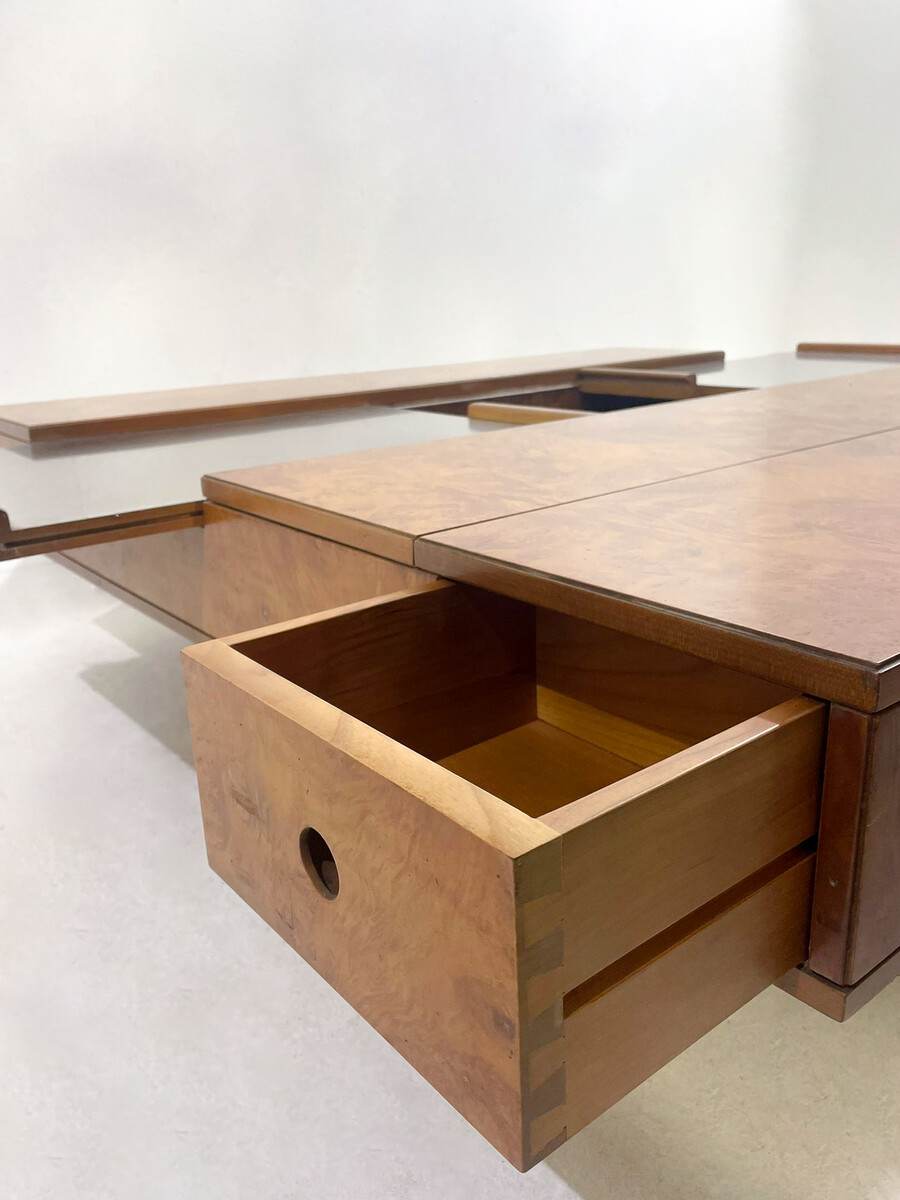
How to Style a Mid-Century Coffee Table
A mid-century coffee table has a particular kind of presence. Low, often curved and usually rich with the warmth of teak, walnut or rosewood, it can anchor a living room without demanding attention.
The best styling does not try to compete with it. It gives the table room to be seen, while adding just enough contrast to make the arrangement feel considered.
Here is how to style a mid-century coffee table in a way that feels natural, useful and true to the piece.
Understand the Character of the Style
Mid-century modern design emerged in the middle of the twentieth century, roughly between the 1940s and 1970s. It is defined by clear forms, practical proportions and an emphasis on materials rather than ornament.
A good mid-century coffee table often has a low profile, tapered or splayed legs and a shape that feels softer than a conventional rectangle. Oval, kidney-shaped and rounded forms bring movement to a room without adding clutter.
Teak and walnut are familiar choices, valued for their depth of colour and grain. Rosewood, burl wood and lighter Scandinavian timbers each bring a different character, from rich and dramatic to quiet and airy.
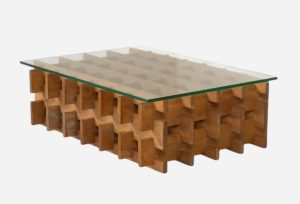
A wood and glass Italian table from the 1960s, for example, combines warm timber with the lightness of glass. That contrast makes it easy to style with both vintage and contemporary pieces. https://livinginstylegallery.com/product/burl-wood-and-metal-coffee-table-italy-1970s/
Let the Table Lead
If the table has a strong grain, an unusual base or a beautiful curve, let it take centre stage.
Keep the surrounding furniture relatively restrained and choose accessories that support the piece rather than obscure it. A sculptural object, a single vase or a small stack of books may be all it needs.
The aim is not to decorate the table. It is to frame it.
A burl wood and brass coffee table, for instance, has enough visual richness to work with a very simple arrangement. Its grain and metal detailing deserve space rather than competition. https://livinginstylegallery.com/product/burl-wood-and-metal-coffee-table-italy-1970s/
Use Contrast, Not Clutter
A wooden table gains presence when it is placed beside something different in feel.
Consider the smoothness of glass against the grain of walnut, the coolness of a ceramic vase against warm timber, or the lightness of a metal lamp beside a solid wooden base. Contrast gives an arrangement energy without requiring extra colour.
Choose one or two materials to introduce. More than that can make the surface feel busy.
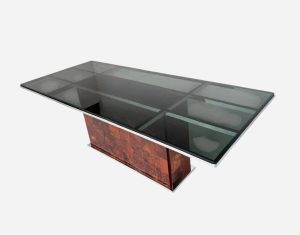
A leather and glass coffee table shows how effectively different materials can work together. Leather brings warmth and texture, while glass keeps the composition open and light.
Leave Room to Breathe
Resist the urge to fill every surface.
Leave some of the table clear. This keeps it useful for everyday life and allows the eye to rest on the piece itself. A small vase, a few books and one object with personality are often enough.
Negative space is part of the styling. It gives the table a sense of calm and makes the pieces you have chosen feel deliberate.
A smaller rosewood table with double trays and a slatted magazine rack particularly benefits from restraint. Its form and materials already provide plenty of interest.
Play With Shape and Scale
Think about height as well as surface area.
A low table benefits from one taller element, such as a vase, a lamp or a sculpture. This creates a gentle vertical line without interrupting the room. Books can add a lower layer, while a bowl or tray provides a practical place for smaller objects.
Avoid arranging everything at the same height. A little variation makes the composition feel more alive.
Bring Vintage and Contemporary Together
A mid-century coffee table does not need to sit in an entirely mid-century room.
It can work beautifully with a contemporary sofa, modern lighting or a more minimal interior. The key is to find a connection: repeat a colour, echo a curve or choose materials that speak to one another.
A walnut table beside a soft bouclé sofa, for example, creates an appealing contrast between structure and softness. A glass-topped table can lighten a room filled with heavier furniture.
A contemporary travertine coffee table can also sit comfortably within a mid-century-led interior. Its low profile, natural material and generous proportions make it a natural companion to vintage seating and lighting.
Consider the Room Around It
The table should feel part of the room, not placed on top of it.
Look at the rug, sofa, flooring and side tables. You do not need to match finishes exactly, but repeating a tone or material elsewhere can create a sense of continuity.
If the table is warm and richly grained, consider keeping nearby surfaces simpler. If it is pale and minimal, it may welcome a stronger texture nearby.
For a wider choice of shapes, materials and periods, browse the tables collection at Living in Style Gallery
Make It Work for Everyday Life
A coffee table should be beautiful, but it should also be used.
Think about how you live. Do you need space for books, drinks or a tray? Is the height comfortable beside your sofa? Is there enough room to move around it?
Choose a table that suits the room’s proportions and your daily routine. A piece that is too large can dominate a small space, while one that is too small may feel lost.
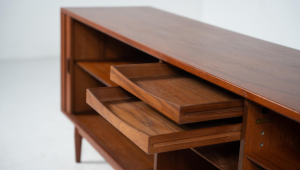
An Italian wooden coffee table with an integrated magazine rack is a good example of practicality built into the design. It keeps everyday reading close at hand without cluttering the surface.
Buy a Piece With Character
The most interesting coffee tables are not always the newest ones.
Vintage and mid-century pieces bring materials, proportions and details that are difficult to reproduce. Their surfaces carry a sense of use, while their forms often feel more sculptural than much contemporary furniture.
Buying vintage also gives a well-made piece another life. Rather than adding something new to a room, you introduce something with history, character and a story of its own. https://livinginstylegallery.com/product/bar-coffee-table-by-jean-claude-mahey-1970s/
In Short
Style a mid-century coffee table by giving it space, introducing contrast and choosing objects that add to its character rather than hide it.
A single vase, a stack of books, a sculptural object and room to breathe may be all it needs.
Explore the tables collection at Living in Style Gallery to find a coffee table with the proportions, materials and presence to anchor your living room.